Digital Detox: 12 Powerful Benefits That Will Transform Your Mental Health
Table of Contents
- What Is Digital Detox?
- Why Is Digital Detox More Important Than Ever?
- Signs You Need a Digital Detox
- 12 Powerful Benefits of Digital Detox
- How Digital Detox Improves Mental Health
- How to Start a Digital Detox
- Digital Detox Tips for Parents and Children
- Common Myths About Digital Detox
- Frequently Asked Questions
- Final Thoughts
Digital Detox: Why It Could Be the Best Decision for Your Mental Health
Digital Detox is becoming one of the most important mental health practices in today’s technology-driven world. From the moment we wake up until we go to bed, most of us are surrounded by smartphones, laptops, tablets, smartwatches, and endless notifications. While technology has made life easier, excessive screen time has quietly become one of the biggest contributors to stress, anxiety, poor sleep, and emotional exhaustion.
If you find yourself checking your phone every few minutes, scrolling through social media without realizing how much time has passed, or feeling mentally drained despite doing very little, it may be time for a digital detox.
The good news is that you don’t have to quit technology completely. Instead, learning to build healthier digital habits can dramatically improve your emotional well-being, relationships, productivity, and quality of life. If stress and anxiety are affecting your daily life, professional support can help.
A digital detox is the intentional reduction or temporary avoidance of digital devices such as smartphones, computers, tablets, social media platforms, gaming consoles, and televisions.
The purpose isn’t to eliminate technology forever but to regain control over how you use it instead of allowing it to control you.
A digital detox may last:
- One hour every evening
- One day every week
- A weekend every month
- During vacations
- Before bedtime every night
Small changes often create significant improvements.

Why Is Digital Detox More Important Than Ever?
The average person spends several hours every day looking at digital screens. Social media algorithms are designed to capture attention, making it easy to spend far more time online than intended. The World Health Organization (WHO) recognizes mental health as an essential part of overall health.
Excessive screen exposure has been associated with:
- Anxiety
- Depression
- Sleep disturbances
- Poor concentration
- Information overload
- Reduced productivity
- Loneliness
- Social comparison
- Burnout
When your brain never gets a chance to disconnect, it remains in a constant state of stimulation. Over time, this mental overload can affect emotional well-being and overall health.
Signs You Need a Digital Detox
You may benefit from a digital detox if you:
- Check your phone immediately after waking up.
- Feel anxious when you leave your phone behind.
- Constantly refresh social media.
- Lose track of time while scrolling.
- Have difficulty concentrating.
- Compare yourself to others online.
- Experience poor sleep due to screen use.
- Ignore family or friends because of your phone.
- Feel exhausted after spending time online.
These habits may seem harmless individually, but together they can significantly affect mental health.
12 Powerful Benefits of Digital Detox
1. Reduces Stress
Constant notifications keep the brain alert throughout the day. Turning them off allows your nervous system to relax.
2. Improves Sleep Quality
Blue light from screens suppresses melatonin production, making it harder to fall asleep. Avoiding screens before bedtime promotes deeper, more restful sleep.
3. Increases Focus
Without frequent interruptions from messages and social media, your attention span naturally improves.
4. Boosts Productivity
A digital detox reduces distractions, helping you complete tasks more efficiently.
5. Improves Mental Health
Reducing exposure to negative news and unrealistic social media comparisons can decrease symptoms of anxiety and depression.
6. Strengthens Relationships
Spending uninterrupted time with loved ones improves communication and emotional connection.
7. Encourages Mindfulness
Living in the present moment becomes easier when you’re not constantly checking your phone.
8. Builds Self-Esteem
Taking a break from comparison culture helps people appreciate their own lives instead of chasing unrealistic online standards.
9. Supports Physical Health
Less screen time often means:
- Better posture
- Less eye strain
- Fewer headaches
- Increased physical activity
10. Sparks Creativity
Your brain becomes more creative when it’s not constantly consuming digital information.
11. Improves Emotional Regulation
People who practice regular digital detoxes often feel calmer and respond more thoughtfully to stressful situations.
12. Creates Better Work-Life Balance
Disconnecting after work prevents burnout and allows time for hobbies, family, and self-care.

How Digital Detox Improves Mental Health
A successful digital detox allows your brain to recover from continuous stimulation. The American Psychological Association (APA) provides resources on stress management and psychological well-being.
Many people notice:
- Lower anxiety
- Better mood
- Increased confidence
- Reduced overthinking
- Improved emotional resilience
- Better concentration
- More meaningful conversations
- Greater life satisfaction
Instead of reacting to every notification, you begin responding intentionally to what truly matters. Cognitive Behavioral Therapy (CBT) can also help individuals develop healthier digital habits.
How to Start a Digital Detox
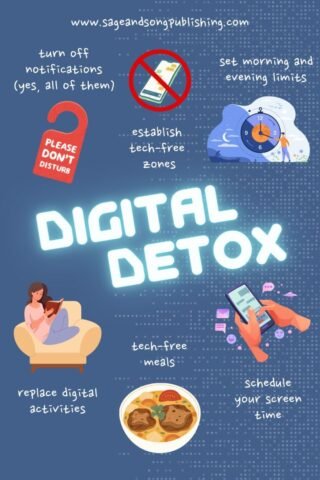
You don’t have to delete every app overnight. Start with small, manageable steps.

Create Phone-Free Zones
Keep phones away from:
- Dining tables
- Bedrooms
- Family gatherings
Set Daily Screen Limits
Most smartphones include built-in screen time tracking tools.
Replace Screen Time
Instead of scrolling, try:
- Reading
- Walking
- Journaling
- Exercise
- Meditation
- Cooking
- Spending time outdoors
Have a Weekly Offline Day
Choose one evening or one day each week to disconnect completely.
Digital Detox Tips for Parents
Children often imitate adult behavior.
Parents can encourage healthy habits by:
- Creating technology-free family meals
- Limiting recreational screen time
- Encouraging outdoor play
- Reading together
- Avoiding phones before bedtime
- Modeling healthy digital habits
Healthy digital boundaries support emotional, cognitive, and social development.
Common Myths About Digital Detox
Myth 1: You Must Quit Technology Completely
False. A digital detox focuses on balance, not elimination.
Myth 2: Only Teenagers Need a Digital Detox
People of every age can benefit from healthier screen habits.
Myth 3: Social Media Is Always Bad
Social media can be helpful when used intentionally and in moderation.
Frequently Asked Questions
How long should a digital detox last?
Even one hour each day without screens can improve focus and mental well-being.
Can a digital detox reduce anxiety?
Many people experience reduced stress and anxiety after limiting excessive screen time.
Is digital detox suitable for children?
Yes. Age-appropriate screen limits can improve sleep, attention, and emotional development.
What should I do instead of using my phone?
Read a book, exercise, spend time with family, practice mindfulness, pursue hobbies, or enjoy nature.
Learn more about mental health from the National Institute of Mental Health (NIMH).
Final Thoughts
Technology has transformed the way we communicate, learn, and work—but without healthy boundaries, it can also overwhelm our minds. A digital detox isn’t about rejecting technology; it’s about reclaiming control over your attention, time, and emotional well-being.
By taking intentional breaks from screens, reducing unnecessary notifications, and creating phone-free moments in your day, you can improve your sleep, strengthen your relationships, increase productivity, and support your mental health. Remember, even small changes—like avoiding your phone during meals or before bedtime—can lead to lasting positive results.
Start your digital detox today. Your mind deserves time to rest, recharge, and reconnect with what truly matters.
На данном ресурсе вы сможете обнаружить много полезной сведений.
https://omskapteka.ru/info/504-remont-i-ukhod-za-krossovkami-prakticheskie-sovety-dlya-prodleniya-sroka-sluzhby.htm
Online experiences supply players a excellent method to interact and compete with peers across the globe.
https://foodlover.km-moda.ru/J9pc6Zy28b1A/
Здесь портале есть возможность отыскать обилие полезной материалов.
https://www.elephantjournal.com/profile/nader76346/
Тут портале есть шанс отыскать ценную информацию.
https://kart1na.ru/entry/102-dibrov-opustil-stoimost-svoey-elitnoy-villy-na-75-mln-rubley-velikodushie-bez-otklika/
На этом сайте вы сможете обнаружить ценную информацию.
https://e-transavto.ru/read/kambek-argentiny-i-uverennyy-bilet-shveytsarii-razbor-matchey-483/
На данном сайте удастся отыскать интересную информацию.
https://omskapteka.ru/info/504-remont-i-ukhod-za-krossovkami-prakticheskie-sovety-dlya-prodleniya-sroka-sluzhby.htm